
Lidding & Sealing Films
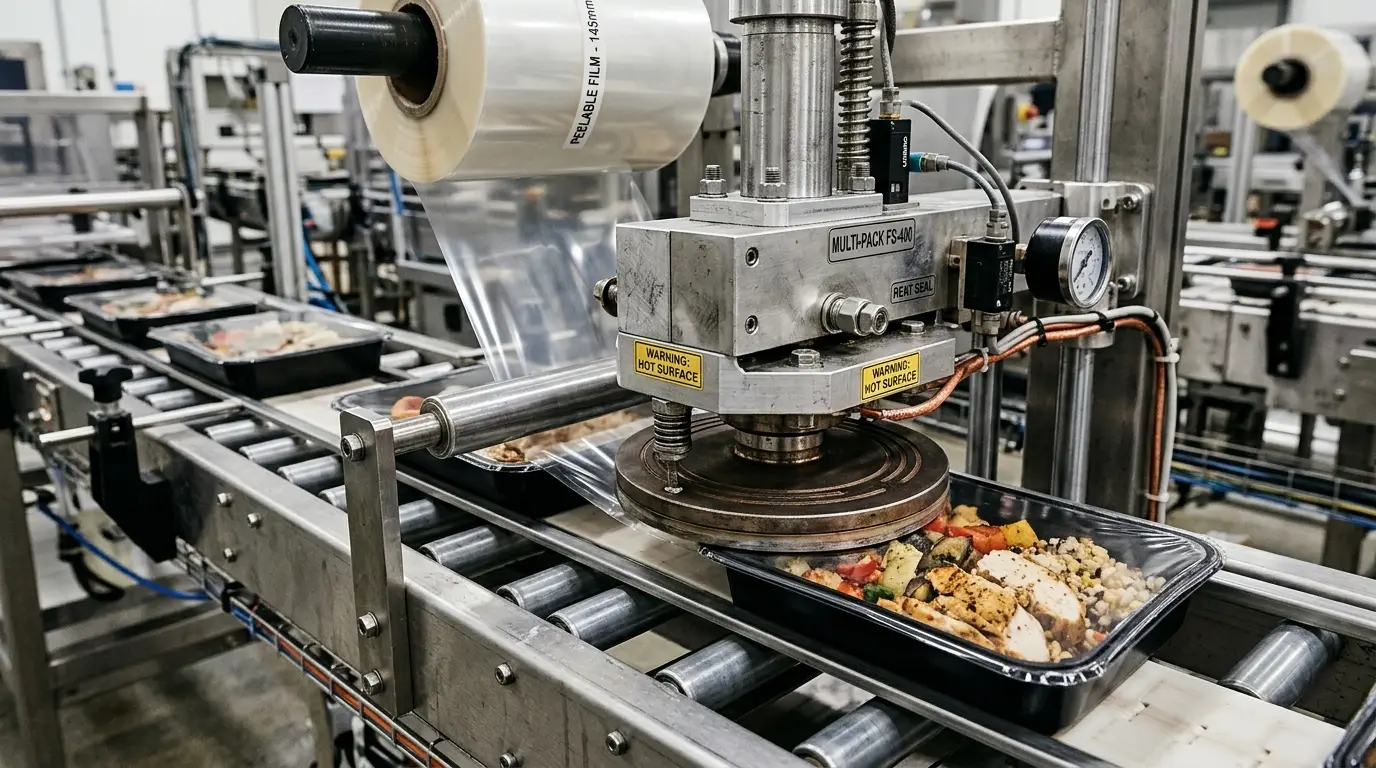
Lidding & Sealing Films
The critical interface between tray and lid — engineered for hermetic integrity, controlled peel, and machine runnability.
The Role of Lidding Film
Lidding film is the top-web component of tray-sealed, blister, and form-fill-seal packages. It performs three simultaneous functions: providing hermetic barrier to protect the product, enabling controlled opening (easy-peel or tearable), and contributing to package decoration and information display. The seal between lidding film and tray flange is the most critical quality parameter — it must withstand distribution forces while remaining openable without tearing or leaving residue.
Seal Types
Hermetic Seal (Permanent)
Maximum seal strength (>15 N/15mm) achieved by destructive bond between sealant and tray flange. Required for retort pouches, aseptic packaging, and sterile medical devices. Opening requires cutting or tearing — typically combined with a tear notch or score line.
Peelable Seal
Controlled cohesive or adhesive failure at 5–12 N/15mm peel force, opening cleanly without film delamination or material transfer to tray. Achieved by formulating the sealant layer to peel against specific substrates (CPET, PP, APET) at defined temperatures and pressures.
Easy-Open / Resealable
Pressure-sensitive adhesive (PSA) or cohesive sealant systems enabling repeated opening and closing. Used in deli, cheese, and snack categories where portion control and freshness retention after opening are important consumer requirements.
Anti-fog Lidding
Surfactant-treated sealant layers prevent condensation droplets forming on the inner film surface, maintaining product visibility in chilled retail display. Critical for fresh produce, salads, and ready meals where appearance drives purchase decision.
Substrate Compatibility
| Tray Material | Sealant Layer | Seal Temp (°C) | Typical Peel Force |
|---|---|---|---|
| PP (polypropylene) | PP-based peelable | 160–200 | 5–10 N/15mm |
| APET (amorphous PET) | PET-based peelable | 140–180 | 6–12 N/15mm |
| CPET (crystalline PET) | High-temp peelable | 180–220 | 8–15 N/15mm |
| PS (polystyrene) | PS-compatible sealant | 130–160 | 5–9 N/15mm |
| Alu foil tray | Heat-seal lacquer | 150–180 | 4–8 N/15mm |
Barrier in Lidding Films
Lidding film barrier must match or exceed the bottom-web barrier to prevent the seal area becoming the weak point. For MAP applications (modified atmosphere), lidding OTR must be below 5 cc/m²/day. Standard structures include PET/PE (low barrier, short shelf-life chilled), BOPP/PE (medium barrier), PET/EVOH/PE (high barrier, MAP), and PET/foil/PE (ultra-high barrier, ambient shelf-stable).
Frequently Asked Questions
What causes seal failure in tray lidding?
The most common causes are contamination of the tray flange (grease, moisture, product residue), seal temperature outside the optimal window, insufficient dwell time or seal pressure, and film/tray substrate incompatibility. Seal integrity testing per ASTM F1140 or EN ISO 11607-1 should be conducted during qualification and monitored in production.
What peel force is considered 'consumer-friendly'?
Consumer research indicates peel forces of 4–8 N/15mm are perceived as easy-open while still providing adequate tamper evidence. Above 12 N/15mm is typically considered too difficult for elderly consumers. The optimal range depends on product category, packaging format, and target demographic.
Can lidding film be printed?
Yes — lidding film is commonly reverse-printed between the outer layer and barrier laminate using flexo or gravure, providing scuff-resistant decoration. Surface printing is also possible for short runs. Print registration accuracy is critical for windowed lids where product is visible through an unprinted panel.