
Bio-based & Recyclable Packaging Materials
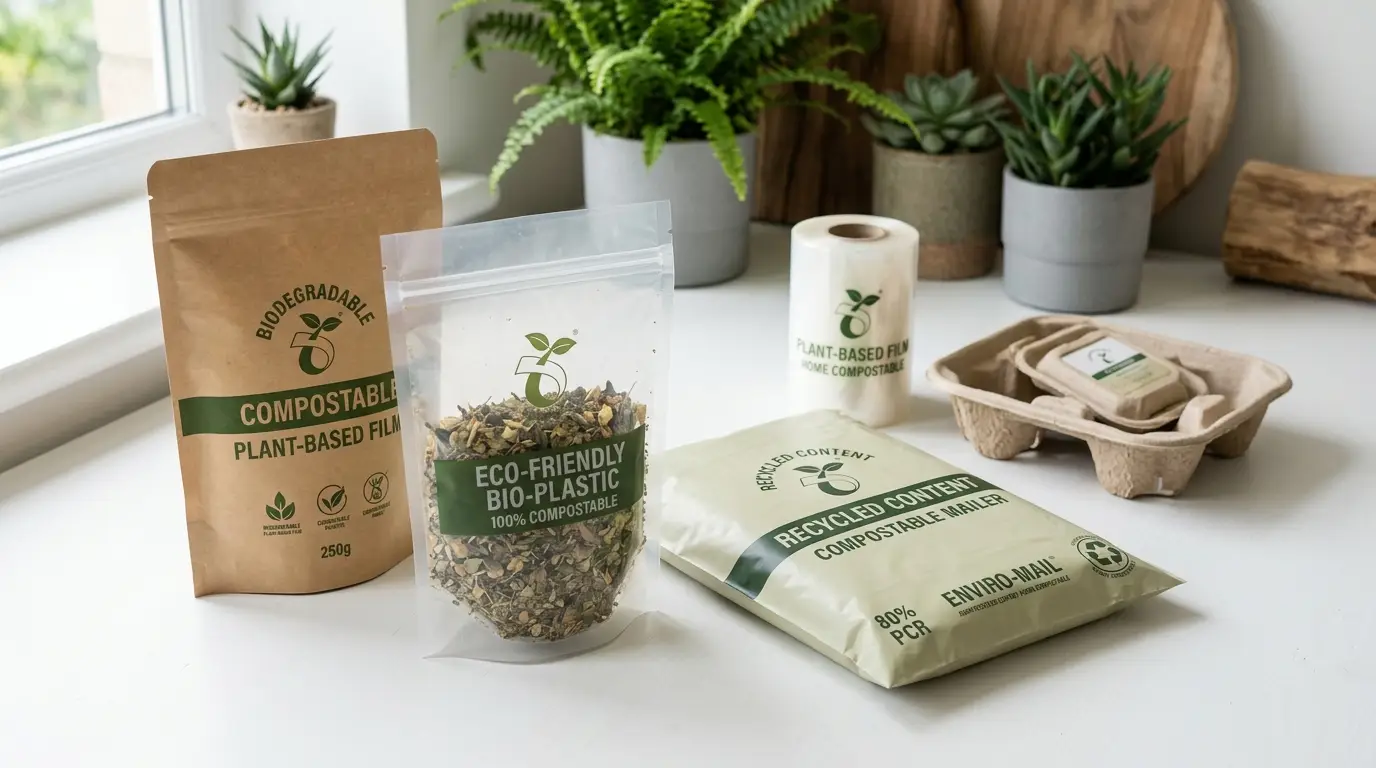
Bio-based & Recyclable Packaging Materials
From bio-PE and PLA to mono-material recyclable laminates — the materials redefining sustainable packaging performance.
The Sustainable Packaging Material Landscape
Sustainable packaging materials are defined by three partially overlapping properties: bio-based origin (derived from renewable biomass rather than fossil feedstocks), recyclability (recoverable in existing or emerging waste streams), and biodegradability/compostability (metabolisable under defined conditions). These properties do not necessarily co-occur — bio-PE is bio-based but not biodegradable; PLA is biodegradable but requires industrial composting; recycled PET (rPET) is recycled but fossil-based. Life-cycle assessment (LCA) is the only rigorous method to compare environmental impacts across these axes.
Bio-based Polymers
Bio-PE (Bio-polyethylene)
Chemically identical to fossil PE but produced from sugarcane ethanol. Drop-in replacement for LDPE, LLDPE, and HDPE in existing processing and recycling infrastructure. Carbon footprint reduction of 50–70% vs. fossil PE. Certified to ISCC or Bonsucro standards. Growing adoption in flexible food packaging where performance parity is non-negotiable.
PLA (Polylactic Acid)
Bio-based and industrially compostable thermoplastic from fermented plant starch (corn, sugarcane). Excellent clarity and stiffness — used in rigid cups, trays, and cold-drink lids. BOPLA film offers barrier and mechanical properties approaching BOPP. Major limitations: low heat resistance (<55 °C), requires industrial composting (not home compostable), and contaminates PE/PP recycling streams.
PHA (Polyhydroxyalkanoates)
Bacterial fermentation-derived polyester that is genuinely biodegradable in soil and marine environments — unique among bio-based polymers. Performance comparable to PP in some grades. Currently limited by high production cost ($4–8/kg vs. $1–2/kg for PP) and inconsistent processing behaviour, but rapidly scaling as fermentation technology matures.
Bio-PET and Bio-PA
Partially bio-based versions of PET (30% bio-MEG from sugarcane) and polyamide grades (PA10.10 from sebacic acid). Enable drop-in replacement with partial carbon footprint reduction. Fully bio-based PEF (polyethylene furanoate) from HMF is in commercial scale-up, offering superior oxygen barrier to PET and 100% bio-based content.
Recyclable Mono-Material Structures
The most pragmatic path to recyclable flexible packaging is mono-material design — eliminating dissimilar polymer combinations that prevent mechanical recycling. Leading approaches:
| Structure | Typical OTR | Recyclable Stream | Applications |
|---|---|---|---|
| All-PE (BOPE/mLLDPE) | 50–500 cc/m²/day | PE flexible | Bread, produce, e-commerce |
| All-PE + EVOH | 1–10 cc/m²/day | PE flexible (conditional) | MAP meat, cheese |
| All-PP (BOPP/CPP) | 500–1500 cc/m²/day | PP flexible | Snacks, confectionery |
| All-PET (BOPET/aPET) | 20–60 cc/m²/day | PET rigid/film | Thermoformed trays |
| Paper + dispersion barrier | 100–500 cc/m²/day | Paper | Dry food, fast-food wrap |
PCR Content — Post-Consumer Recycled Materials
EU PPWR mandates minimum PCR content targets for plastic packaging: 30% for contact-sensitive flexible packaging and 50% for non-contact applications by 2030. rPET (recycled PET) is the most established PCR resin with consistent availability and food-contact approval under EFSA Opinion 2011. rHDPE, rPP, and rLDPE are scaling rapidly. Incorporating PCR requires careful quality management — colour, odour, melt index, and contamination must be controlled to maintain functional performance.
Frequently Asked Questions
Is bio-based the same as biodegradable?
No — these are independent properties. Bio-based describes feedstock origin (renewable biomass vs. fossil). Biodegradable describes end-of-life behaviour (metabolised by microorganisms). Bio-PE is bio-based but not biodegradable — it behaves identically to fossil PE in the environment. PHA is both bio-based and biodegradable. Fossil-based materials like PBAT are biodegradable but not bio-based. Always evaluate both properties separately in sustainability assessments.
What does 'home compostable' mean vs. 'industrially compostable'?
Industrial compostability (EN 13432) requires complete disintegration within 12 weeks at 58 °C in a managed composting facility. Home compostability (OK compost HOME / AS 5810) requires disintegration within 12 months at ambient temperatures (≥20 °C) in a garden compost heap. Most PLA-based materials are industrially compostable only — not home compostable. Truly home compostable flexible films remain technically challenging.
How much does switching to recyclable mono-material structures cost?
The cost premium for recyclable mono-material structures vs. conventional laminates has fallen from 40–60% (2018) to 10–25% (2024) as volumes scale. Some all-PE structures now approach cost parity for ambient applications. The business case improves when EU Packaging Levy costs, Extended Producer Responsibility fees, and consumer brand premiums for sustainable packaging are included in the total cost analysis.