
Sustainable Packaging
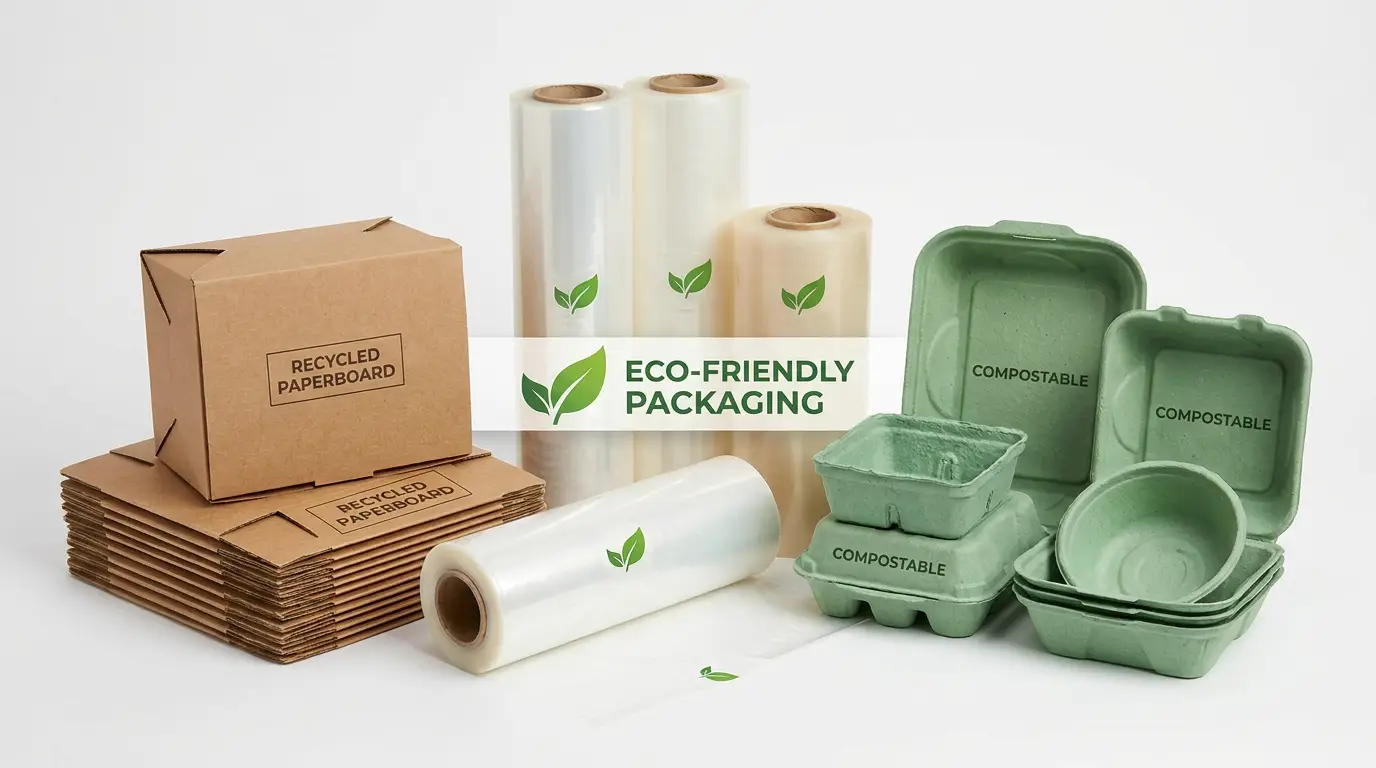
Sustainable Packaging
Recyclable monomaterials, bio-based films, post-consumer recycled content, and LCA methodology — the engineering framework for reducing packaging's environmental footprint without sacrificing performance.
Sustainable Packaging: The Engineering Challenge
Sustainable packaging means designing packaging systems to reduce environmental impact across their full lifecycle — from raw material extraction through manufacturing, use, and end-of-life recovery. The challenge is achieving sustainability targets while maintaining the technical performance modern packaging requires: barrier, seal integrity, machinability, and cost-competitiveness.
In the EU, the Packaging and Packaging Waste Regulation (PPWR), extended producer responsibility (EPR) fees calibrated to recyclability, and retailer sustainability scorecards are the primary legislative and commercial drivers of reformulation. By 2030, the PPWR mandates minimum recycled content levels and recyclability performance criteria for all packaging placed on the EU market.
Key regulatory reference: EU Packaging and Packaging Waste Regulation (PPWR) · ISO 14040 LCA · EN 13432 (compostability)
Recyclable Monomaterial Packaging
Conventional flexible packaging uses multilayer laminates combining different polymers (PE, PP, PET, PA, EVOH, aluminium foil) to achieve barrier and seal performance. These structures are not recyclable in standard streams because the layers cannot be economically separated. Monomaterial structures — all-PE or all-PP multilayer coextrusions — address this by engineering comparable performance from a single polymer family, enabling recyclability in established collection and reprocessing infrastructure.
The engineering trade-off: monomaterial structures require more sophisticated barrier technology (thin EVOH layers within the same polymer family, PVdC or AlOx coatings) and may show reduced machinability on existing FFS or tray sealing equipment. Qualification on the target machine is always required. See the FFS technology overview and tray sealing overview for format-specific considerations.
Post-Consumer Recycled (PCR) Content
PCR content in thermoformed trays (rPET, rPP) and flexible films (rPE) reduces virgin polymer demand and closes the material loop for collected packaging waste. Technical considerations: colour variation (PCR is typically darker), odour (volatile contaminants from waste stream), and mechanical property variability versus virgin. Food-contact PCR requires EFSA decontamination efficacy assessment for materials not covered by existing recycling process approvals.
Bio-Based and Compostable Materials
Bio-based packaging (PLA from corn, bio-PE from sugarcane) uses renewable feedstocks. Bio-based does not automatically mean compostable — PLA is compostable only under industrial composting conditions (EN 13432), not home composting or the natural environment. Bio-PE is chemically identical to fossil PE and recyclable in PE streams but not biodegradable. Compostable packaging is appropriate for food-soiled applications where conventional recycling is not feasible; collection and processing infrastructure remains limited in most EU markets.
Life Cycle Assessment (LCA)
LCA quantifies environmental impact across climate change, resource use, water stress, and ecotoxicity impact categories using ISO 14040/44 methodology. Without LCA, sustainability claims risk focusing on a single indicator — recycled content, bio-based origin — while missing offsetting impacts elsewhere in the system. Packaging engineers are increasingly expected to work with LCA data during material selection and to present results to procurement and sustainability functions as part of new packaging development. For sustainable packaging in medical device contexts, see MedicoPax sustainable medical packaging →
Frequently Asked Questions
Recyclable packaging can be collected and reprocessed into new materials in existing infrastructure — the most scalable end-of-life route currently available. Compostable packaging breaks down under defined conditions (EN 13432 for industrial composting) into water, CO₂, and biomass within a set timeframe — requires industrial composting infrastructure and is not equivalent to 'biodegradable in nature'. Biodegradable has no standardised definition in EU packaging regulation and should be avoided as a standalone claim. Most sustainable packaging strategy prioritises recyclability because composting infrastructure is limited.
A monomaterial structure uses a single polymer family (typically all-PE or all-PP) across all layers of a multilayer film, enabling recyclability in the corresponding polymer stream. Conventional multilayer laminates use different polymers (e.g., PET/PE, PA/PE, PE/EVOH/PE) to achieve barrier performance — these are not recyclable because the layers cannot be economically separated. Monomaterial structures achieve comparable barrier through advanced coextrusion, thin EVOH integration, or functional coatings while keeping all layers within the same recycling stream.
The EU PPWR (Packaging and Packaging Waste Regulation) is the legislative framework governing packaging placed on the EU market, replacing the 1994 Directive 94/62/EC. It sets mandatory recyclability performance criteria, minimum PCR content levels (phased from 2030), labelling requirements for recyclability, and restrictions on certain single-use plastic formats. Compliance affects all packaging placed on the EU market, regardless of where it is manufactured. Full text: European Commission PPWR page.
LCA for packaging follows ISO 14040 (principles and framework) and ISO 14044 (requirements and guidelines). The process defines the functional unit (e.g., 'packaging protecting 1 kg of chilled fresh beef over 14 days chilled shelf life'), the system boundary (typically cradle-to-grave), and the impact categories to be assessed. Data collection covers material production, packaging manufacturing, transport, use phase, and end-of-life. Specialist LCA software (SimaPro, GaBi, OpenLCA) and databases (ecoinvent) are used for calculation. Results should be reviewed by an independent expert for credibility, particularly for comparative claims used in marketing.
Yes — sustainable packaging development is being pursued across all major food packaging formats including MAP. Monomaterial barrier films with EVOH barrier layers are available for MAP tray sealing and FFS applications. rPET and rPP trays are compatible with MAP sealing on standard tray sealers. The shelf-life performance of sustainable alternatives must be validated — barrier and seal properties may differ from conventional structures. A sustainable packaging switch that shortens shelf life and increases food waste may not deliver a net environmental benefit, which is why LCA is important for evaluating the full picture.
Material comparison, LCA, and EPR compliance — covered in the 2026 sustainable packaging guide.
Read the full guide →