

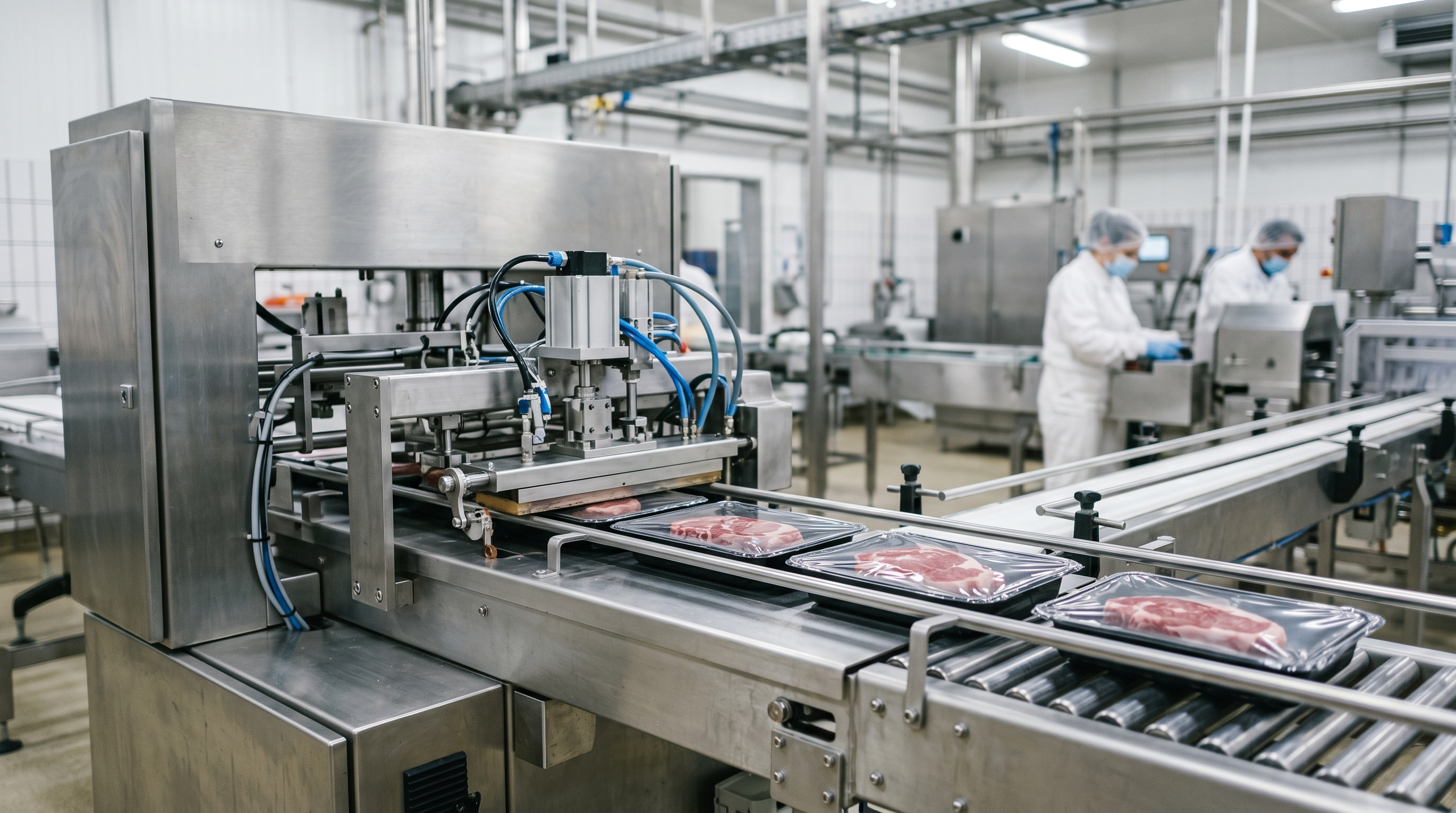
- A modified atmosphere packaging machine replaces the air inside a pack with a controlled gas mix — typically nitrogen, carbon dioxide, and sometimes oxygen — to extend shelf life without preservatives.
- The two dominant MAP machine formats are tray sealers (pre-made trays) and thermoformers (in-line formed packs); chamber machines and VFFS systems cover bags and pouches.
- Gas-flush accuracy and residual oxygen (target <1%) are the specifications that most directly determine achievable shelf life.
- Every MAP machine should be validated against your actual product, because microbial behaviour depends on composition, starting load, and temperature history.
- Match the machine to production volume first: semi-automatic units suit SMEs, while fully automatic inline systems serve high-throughput facilities.
A modified atmosphere packaging machine — often shortened to MAP machine — is the equipment that makes extended-shelf-life fresh food possible. By removing oxygen and replacing it with a tailored gas blend, a MAP machine slows microbial growth and oxidation, keeping meat, poultry, bakery, and produce fresher for longer. This guide explains the main MAP machine types, the gas-control technology behind them, the specifications that matter, and how to choose the right system for your line.
Table of Contents
- What is a MAP machine?
- How a MAP machine works
- MAP machine types
- Choosing a MAP machine
- Technical specifications
- Industry insight
- Frequently asked questions
What is a MAP machine?
A modified atmosphere packaging machine is a sealing system that evacuates the air from a package and flushes in a precise gas mixture before sealing. The "modified atmosphere" inside the finished pack protects the product: nitrogen acts as an inert filler that prevents pack collapse, carbon dioxide suppresses bacterial and mould growth, and a small amount of oxygen is sometimes retained to preserve the red colour of fresh meat. The underlying preservation science is covered in depth in our modified atmosphere packaging guide; this article focuses on the machines that deliver it.
Unlike simple vacuum packaging, MAP maintains a controlled headspace, which protects delicate products such as sliced meats, soft fruit, and bakery items that would be crushed by a full vacuum.
The commercial case for a MAP machine is compelling: longer shelf life reduces food waste and write-offs, widens distribution range, and supports premium retail presentation — all without chemical preservatives. For producers shipping to centralised retail distribution, the extra days of shelf life can be the difference between a viable listing and a rejected one. This is why MAP has become the default format for chilled fresh-food categories across European and North American retail.
How a MAP machine works
Although formats vary, every MAP machine performs the same core cycle:
1. Product placement
Product is loaded into a tray, formed cavity, or pouch — manually on smaller machines, or automatically on high-speed inline systems.
2. Air evacuation
The sealing chamber or station removes ambient air from around the product, lowering the residual oxygen level before gas is introduced.
3. Gas flushing
A precisely metered blend of nitrogen and carbon dioxide (with optional oxygen) is injected into the headspace. Accurate gas control is essential: too little CO₂ fails to inhibit microbial growth, while too much can affect texture or flavour.
4. Sealing
A heat-sealed lidding film or pouch seal locks in the modified atmosphere. Seal integrity is the single most common failure point — a microscopic channel leak allows oxygen back in and negates the gas mix entirely.
5. Verification
Best-practice lines verify residual oxygen and seal integrity with inline or sampling checks, because the achieved headspace — not the target — determines real-world shelf life.
MAP machine types
MAP capability is delivered across several machine formats, each suited to a different pack style and volume.
MAP tray sealers
The most common format: product is placed in a pre-made tray, the machine evacuates and gas-flushes the headspace, then heat-seals a lidding film. Tray sealers are available as semi-automatic single-station units and as fully automatic rotary or linear inline systems. See our dedicated tray sealer machine guide and tray sealing packaging guide for detail.
MAP thermoforming machines
Thermoformers form the tray in-line from a roll of film, gas-flush, and seal in one continuous process. They offer the lowest per-pack material cost at high volume and full cavity-shape flexibility, as explained in our thermoforming packaging guide.
Chamber MAP machines
Bag or pouch products are placed in a sealed chamber that evacuates, gas-flushes, and seals. Chamber machines are flexible and lower-cost, suiting smaller producers and varied pack sizes.
VFFS and HFFS MAP systems
Vertical and horizontal form-fill-seal machines create a bag or flow-wrap from a film roll and inject gas before sealing — ideal for snacks, salads, and produce. See our form fill seal guide and flow wrap packaging guide.
- You use pre-made trays and value fast format change-over.
- You run low-to-medium volumes or a wide range of SKUs.
- You want a lower entry cost than an inline thermoformer.
Choose a MAP thermoformer when you run high volumes, want the lowest per-pack material cost, and need custom cavity shapes. Choose a chamber or VFFS machine for bags and pouches.
Validation and compliance
Beyond the machine itself, a robust MAP operation depends on documented validation and ongoing quality control. With the EU Packaging and Packaging Waste Regulation and tightening recyclability rules, producers increasingly pair MAP performance with recyclable mono-material lidding — balancing protection against the sustainability expectations covered in our sustainable packaging materials guide.
Technical specifications
Compare MAP machines on the parameters that govern shelf life and throughput, not just headline speed.
| Specification | Typical range | Why it matters |
|---|---|---|
| Residual oxygen | <0.5–1% | Defines achievable shelf-life extension |
| Gas-flush accuracy | ±1–2% | Keeps the protective mix consistent |
| Cycle output | 3–15 packs/cycle | Drives hourly throughput |
| Seal force / temperature | Product-specific | Governs leak-free seals |
| Automation level | Semi to fully automatic | Matches labour and volume |
Common MAP gas blends:
| Product | Typical gas mix | Purpose |
|---|---|---|
| Red meat | 70% O₂ / 30% CO₂ | Colour + microbial control |
| Poultry | 70% N₂ / 30% CO₂ | Microbial control, no oxidation |
| Cheese | 100% CO₂ or N₂/CO₂ | Mould suppression |
| Bakery | 100% N₂ or N₂/CO₂ | Anti-staling, mould control |
Choosing a MAP machine
Start with the product and the shelf-life target, then select the gas mix, and only then choose the machine format and automation level. A modified atmosphere packaging machine must be validated with your actual SKU: build a validation package that defines target gas specs, acceptable oxygen limits over time, seal-integrity criteria, and shelf-life endpoints reflecting how the product is really stored and displayed. For small and medium enterprises, semi-automatic tray sealers or chamber machines are often sufficient; larger facilities benefit from fully automatic inline tray sealers or thermoformers that remove labour bottlenecks. Size the machine for current volume plus realistic growth so it does not constrain output within a year, and factor in gas consumption, film cost, and downstream inspection.
Frequently asked questions
What is the difference between MAP and vacuum packaging?
Vacuum packaging removes all air and collapses the pack around the product, while MAP maintains a protective gas headspace. MAP suits delicate or sliced products that would be crushed by a vacuum.
What gases does a MAP machine use?
Most MAP blends combine nitrogen and carbon dioxide, with oxygen added only for products like red meat where colour retention matters. The exact ratio depends on the product.
How long does MAP extend shelf life?
Depending on product, gas mix, and cold-chain control, MAP can extend shelf life by 50–400% versus air packaging, but the result must be validated for each specific SKU.
Do I need a tray sealer or a thermoformer for MAP?
Tray sealers use pre-made trays and offer fast flexibility at lower volumes; thermoformers form trays in-line for the lowest per-pack cost at high volume. The choice depends on volume, SKU range, and material cost targets.
What residual oxygen level should a MAP pack achieve?
Most fresh-food MAP applications target less than 1% residual oxygen, and often below 0.5%, verified by inline or sampling checks.
Can a MAP machine handle multiple product types?
Yes, with the appropriate tooling, film, and gas settings. Flexible tray sealers and chamber machines are particularly suited to multi-SKU operations.
How is MAP seal integrity tested?
Seal integrity is checked with methods such as pressure or vacuum decay testing, dye penetration, and headspace gas analysis, since a single channel leak negates the entire gas mix.
For premium oxygen-free formats that complement MAP, see our vacuum skin packaging guide. Authoritative external references on MAP technology and food-packaging trends are available from Packaging World and FoodNavigator.
Share:
Food Processing Lines: Stages, Slicing & Integration Guide
Biopolymer Packaging Materials: PLA, PHA & Bio-Based Alternatives