High-barrier lidding film: the tray's other half
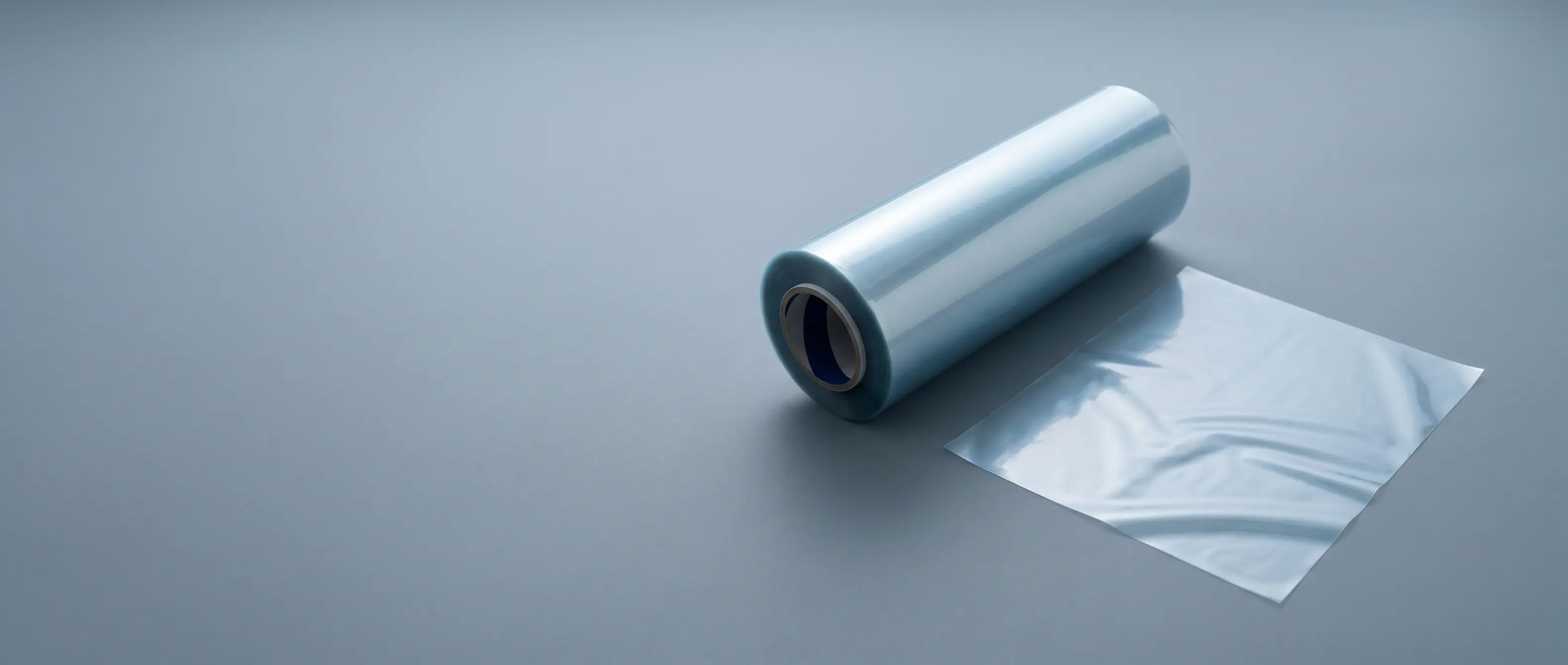
High-barrier lidding film is the clear (or printed) top that turns a formed tray into a sealed, shelf-life-extending pack. Where the tray provides the shape and the structure, the lidding film provides the seal and the barrier — and in modified-atmosphere packaging (MAP), it holds the protective gas mix that keeps meat red, cheese fresh and salad crisp far longer than air would allow. Like the other lidding materials in this catalogue, it is sealed, never formed: the tray was thermoformed; the film simply closes it.
The barrier comes from EVOH (ethylene vinyl alcohol), the food industry's oxygen-barrier workhorse — a thin, brittle, moisture-sensitive core carried in a multilayer structure (classically PET/EVOH/PE or PA/EVOH/PE) where an outer layer gives strength and print, PE (or PP) gives sealing and moisture protection, and tie layers bond the dissimilar polymers. The second defining choice is seal type — peelable for clean consumer opening, weld for leak-tight MAP integrity through distribution — and the live constraint is that the film's seal layer must match the tray's sealing surface. A barrier film with the wrong seal layer is a leaker waiting to happen. Its fastest-moving frontier is recyclability: PPWR and retailer mandates now push mono-material lidding on matching trays that keeps barrier while staying single-stream recyclable.
Lidding film structures and variants
PET/EVOH/PE (barrier peelable/weld) is the mainstream high-barrier structure: PET outer for strength and print, EVOH core for oxygen barrier, PE seal layer for sealing and EVOH moisture protection. It is the default clear MAP lid for APET/rPET-family trays.
PA/EVOH/PE (nylon-strength barrier) uses a nylon outer for extra toughness and puncture resistance — favoured for vacuum packs and demanding meat and fish applications — with the same EVOH-core, PE-seal barrier-and-seal logic.
PP/EVOH/PP (ovenable / hot-fill) is an all-polypropylene barrier structure for ovenable, hot-fill and retort-adjacent duty, and the basis of recyclable mono-PP lidding on PP trays: heat resistance plus a route to single-stream recyclability.
Peelable vs weld-seal grades are the same barrier film tuned for opening: peelable seal layers for clean consumer opening (ready meals, dairy), weld seal layers for leak-tight MAP integrity through distribution. The choice is the opening-versus-integrity trade.
Recyclable mono-material grades are mono-PP and mono-PET-compatible lidding designed for single-stream recycling with matching trays — barrier retained via thin in-family EVOH or coatings. This is the PPWR-driven growth segment.
Functional variants add anti-fog for a clear view of chilled product through condensation, high-clarity or premium black/matte finishes, reverse or surface print, and tamper-evident constructions — the consumer-facing feature set.
Using lidding film: seal, flush, peel or weld
Lidding film's processing is tray sealing, because it is a top film, not a formed part. On a tray sealer the filled tray enters a sealing tool, the film is drawn across the flange, and (for MAP) the pack is gas-flushed — air evacuated and the modified atmosphere introduced — before a heated seal tool bonds the film's seal layer to the tray flange and cuts the film to shape. On thermoform-fill-seal lines the same sealing happens in-line against a formed bottom web. The film is shaped only by the seal and the cut.
Seal-layer matching precedes the recipe: the film's seal layer must suit the tray's sealing surface — PE-seal to APET/PE-lined trays and a board's PE coating, PP-seal to PP trays, ovenable seals to CPET. Matched correctly, the film bonds cleanly without over-sealing or weak zones; matched wrongly, no recipe rescues it. The seal recipe (temperature, pressure, dwell) then follows the tray resin — PP and CPET seal warmer than APET and PS.
Peelable versus weld is engineered into the seal: peelable films are formulated and sealed to give a clean, controlled peel force — strong enough to hold and survive distribution, weak enough for a consumer to open cleanly — while weld seals drive a permanent, leak-tight bond for maximum MAP integrity. The seal window for peelable films is a two-sided target (peel strength between a floor and a ceiling), which makes its validation as careful as any sterile-barrier peel.
MAP integrity is the shelf-life gate: seal continuity, the film's barrier (no pinholes, correct EVOH) and gas-flush effectiveness are validated together against the target shelf life. A perfect barrier film over a leaking seal, or a sound seal under a pinholed film, both fail the same way — the atmosphere escapes and shelf life collapses. Leak detection and residual-oxygen checks are the format's routine QC.
The EVOH core needs respect for moisture: its oxygen barrier degrades when wet, which is why PE and PET layers sandwich it — and why processing, storage and the pack's own humidity matter. The multilayer design protects the EVOH, but the process must not defeat that protection. Anti-fog, print and functional layers are built into the film and revealed in use: anti-fog additives migrate to the inner surface to keep condensation clear, print sits on or under the outer layer with the seal area kept clear, and tamper-evident features are constructed into the seal or film.
Where lidding film is used: applications in depth
High-barrier lidding film's applications are the fresh and chilled food categories whose shelf life modified-atmosphere packaging transformed — and in each, the same job repeats: the EVOH lid holds the protective atmosphere the tray was filled with, and the seal keeps it there. What changes across categories is which secondary property leads — puncture strength, peel, ovenability or recyclability.
MAP meat, poultry & fish — High-oxygen-barrier top films holding modified atmospheres that protect colour and freshness — the format's largest food category; PA/EVOH/PE for puncture-demanding cuts. Dairy & deli trays — Peelable barrier lids for cheese, deli and prepared foods — secure seal, easy consumer open, extended shelf life; APET and PS trays dominate the base. Ready meals & ovenable packs — Ovenable-seal top films on CPET and PP meal trays — barrier lid for chilled shelf life, cooked or peeled at home; seal layer matched to dual-oven duty. Recyclable mono-material packs — Mono-PP or mono-PET lidding on matching trays — barrier via in-family EVOH or coatings while keeping the pack in one recycling stream. The PPWR-driven growth segment.
MAP meat, poultry and fish is the largest stage: high-oxygen atmospheres protect red-meat colour while the EVOH barrier holds them, and nylon-strength PA/EVOH/PE structures serve puncture-demanding bone-in and sharp products. Dairy and deli lean on peelable barrier lids the consumer opens by hand; ready meals pair barrier lidding with CPET and PP meal trays, peeled before microwaving or ovenable in the tray. And across all of them, recyclable mono-material packs — mono-PP on PP trays, mono-PET-compatible on PET trays — are the applications reshaping the category as PPWR and retailer mandates pull MAP packaging toward single-stream recyclability without surrendering shelf life.
Specifying lidding film: the decisions that matter
A lidding film specification is a system specification, settling five things together. Barrier to the shelf-life target: the product's oxygen sensitivity and required shelf life set the OTR, which sets the EVOH content and structure — specified from the real shelf-life goal, not a generic 'high barrier' label. Seal layer matched to the tray: PE-seal for APET/PE-lined and board, PP-seal for PP, ovenable for CPET — the compatibility constraint that governs whether the pack seals at all.
Peelable or weld: consumer-opened formats (ready meals, dairy) take peelable with a validated two-sided peel force; distribution-critical MAP integrity takes weld — the opening-versus-integrity decision, made against how the pack is opened and how far it travels. Functional layer set: anti-fog where chilled product must stay visible, clarity or premium finish for shelf appeal, print and tamper-evidence as the format needs.
And — increasingly first, not last — the recyclability route: mono-PP or mono-PET-compatible structures on matching trays where PPWR and retailer mandates apply, with barrier retained in-family. A lidding film specified across barrier, seal-match, opening, function and recyclability is a shelf-life system that runs and complies; specified as 'a clear barrier lid', it seals wrong to the tray, misses the shelf-life target, or fails the recyclability mandate — usually the first of these, at the sealing station.
Designing lidding-film packs: seal, view and open
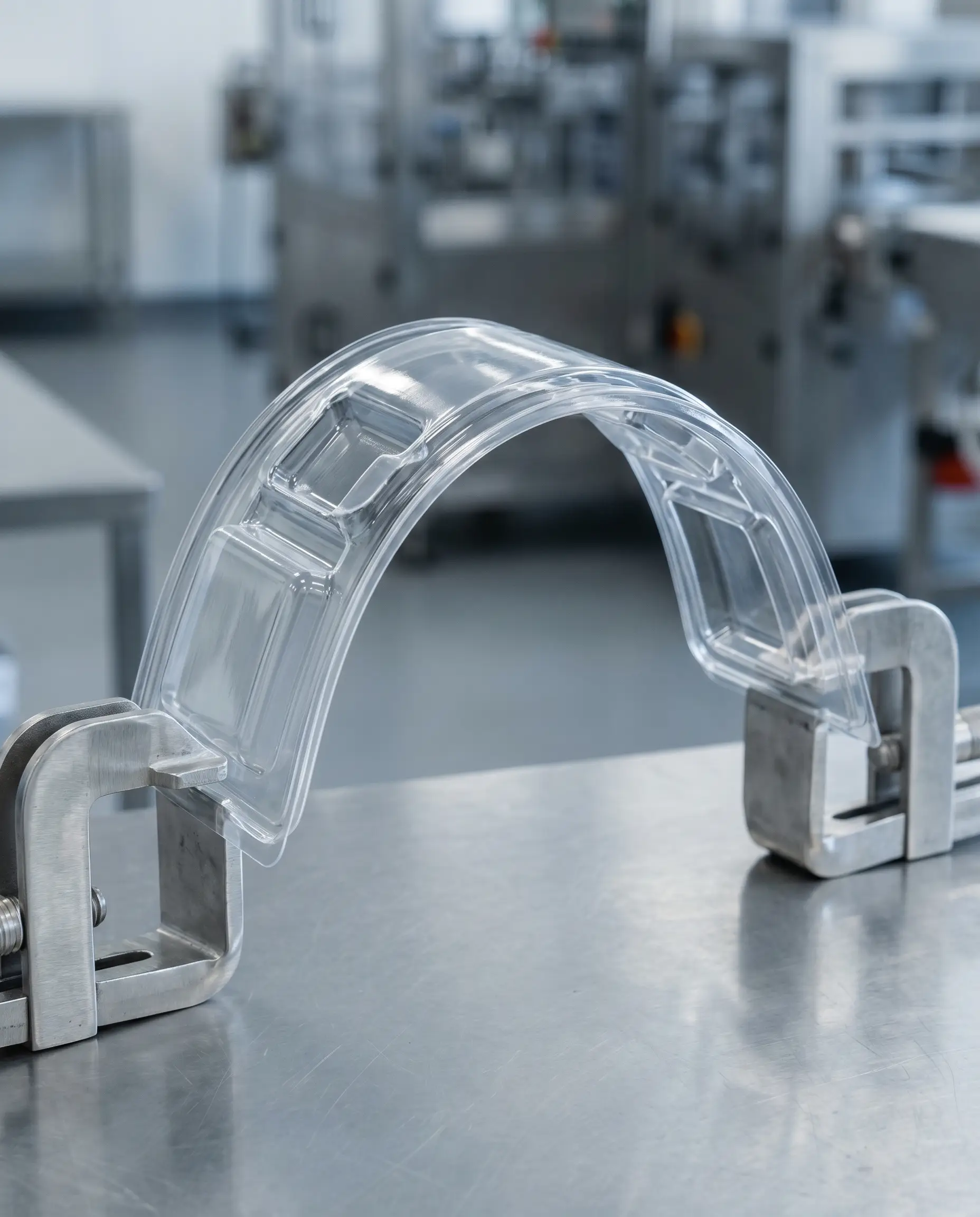
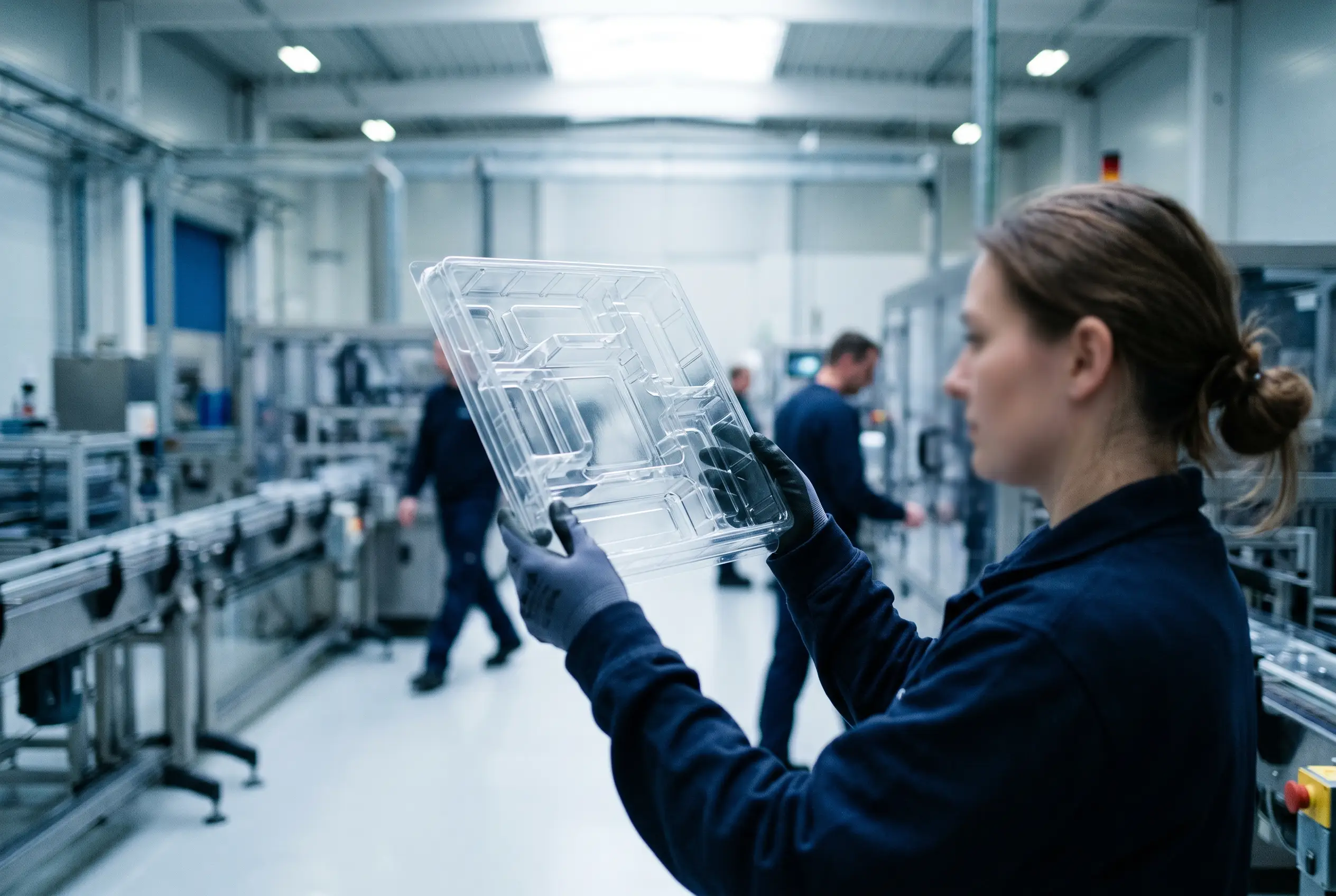
Lidding-film pack design is tray-and-film system design: the film seals to the tray flange, so the flange is the shared design surface — flat, adequate and uninterrupted for a continuous MAP-tight seal, with a designed peel-initiation feature (corner tab, unsealed lug) where the film peels. The tray's cavity does the containing; the flange does the sealing; the film does the barrier and the opening. Design each interface deliberately.
Design the peel for the human (peelable formats): a consumer opens the pack in the kitchen, so the peel must start easily at an obvious tab, run smoothly without tearing the film or lifting the tray flange, and — in premium formats — leave a reclosable interface. The two-sided peel force (holds through transit, opens by hand) is a design target validated on the actual tray and film pairing.
Design for the view: chilled fresh product sells through the lid, so clarity and anti-fog are design choices — anti-fog keeps condensation from whiting out the product, and clear (or deliberately premium black/matte) finishes set shelf presence. Where the film prints, keep print clear of the seal area and design the graphic around the product window the clarity provides.
Design the barrier to the pack, not the film: the pack's shelf life depends on the total system — film barrier, seal integrity, tray barrier and gas mix — so a high-barrier lid over a low-barrier tray is a mismatch, and the tray's own barrier (or lack of it) belongs in the shelf-life calculation. Match lid and tray barrier to the same target; the atmosphere leaks through the weakest component.
Finally, design for recyclability from the start where mandates apply: choose a mono-material tray-and-film family (mono-PP or mono-PET-compatible), keep barrier in-family (thin EVOH within tolerance, or coatings), and verify the whole pack certifies to the destination market's recyclability rules. Retrofitting recyclability onto a validated multi-material MAP pack is far harder than designing the family in from the outset.
Lidding film troubleshooting: leaks, peel and barrier
Leakers and MAP loss are the shelf-life-critical defect, and the causes split three ways: seal problems (seal-layer/tray mismatch, wrong recipe, contamination on the flange, product in the seal), film problems (pinholes, barrier defects), or flange problems from the tray. Because a leaking MAP pack loses its atmosphere and its shelf life, the response is systematic — confirm seal-layer-to-tray match, verify the seal recipe and flange cleanliness, leak-test, and check residual oxygen. Product caught in the seal (crumbs, fat, moisture) is a classic overlooked cause.
Peel too strong or tearing (peelable formats) means the seal is over-driven or the seal layer mismatched: the consumer can't open it cleanly, or the film tears instead of peeling. Bring the seal recipe down within the peelable window; if the window is too narrow, revisit the seal-layer grade against the tray. Peel too weak or seals opening in transit is the opposite failure — the pack opens before the consumer — and demands raising the seal within the validated two-sided window.
Barrier shortfall or short shelf life with sound seals points to the film's barrier: insufficient EVOH for the target, a compromised (wet-damaged) EVOH core, or pinholes from handling. Verify the structure matches the shelf-life OTR target (specified from the product, not generically), check storage and process haven't wetted the EVOH, and inspect for pinholing. The tray's barrier belongs in this diagnosis too — the pack leaks through its weakest layer.
Fogging or condensation obscuring the product defeats the see-through selling point on chilled packs: it means anti-fog is absent, insufficient, or was compromised (wrong side, degraded). Specify or upgrade the anti-fog additive, and verify it faces the pack interior. On premium clear formats, fogging is a merchandising failure as much as a technical one.
Seal contamination and flange issues — weak or intermittent seals traced to the flange — are often tray-side: flange distortion, contamination, or a sealing surface the film's layer doesn't match. Audit the tray flange condition and its sealing-surface resin before adjusting the film, since the seal is a pairing and either half can fail it. Recyclability-claim failures — a 'recyclable' pack that isn't, in the destination market — arise from multi-material structures or unverified claims; resolve them at specification with a mono-material family, in-family barrier within recyclability limits, and validation against the actual market's rules.
Barrier behaviour: oxygen is the headline
Lidding film is specified first for its oxygen barrier, because that is what MAP shelf life turns on: the EVOH core delivers a high oxygen barrier (OTR tuned by EVOH content and thickness), holding the modified atmosphere in and ambient oxygen out so oxidation, discolouration and off-flavours are slowed. For fresh protein, dairy and prepared foods, oxygen control is the shelf-life lever, and the EVOH lid is the component that pulls it.
The moisture story is a supporting one: the film's PE and PET layers give a good moisture barrier, which matters both for the product and — critically — for the EVOH itself, whose oxygen barrier degrades when wet. The multilayer structure exists partly to keep the moisture-sensitive EVOH dry between its polyolefin and polyester neighbours; the moisture barrier protects the oxygen barrier as much as the food.
The essential system truth is that the pack's barrier is the weakest of lid, seal and tray: a superb EVOH lid holds nothing if the seal leaks or the tray is permeable, so barrier is specified across the whole pack to one shelf-life target. This is why lidding film is sold as a system component — its barrier number is meaningful only paired with a matching seal integrity and tray barrier, all validated together against the residual-oxygen and shelf-life goals the product actually needs.
Sustainability: the recyclability re-engineering
High-barrier lidding film sits at the centre of food packaging's recyclability reckoning, because its traditional strength — multilayer structures marrying barrier, seal and strength — is exactly what mechanical recycling struggles with. A PET/EVOH/PE lid on an APET tray is a shelf-life triumph and a multi-material recycling problem, and honest assessment starts there: conventional high-barrier lidding is not readily recyclable, and its EVOH-and-tie-layer construction is why.
The response is real and accelerating: mono-material lidding — mono-PP films on PP trays, mono-PET-compatible structures on PET trays — engineered to keep enough barrier (thin in-family EVOH within recyclability tolerances, or coatings) while entering a single recycling stream. Fully-recyclable lidding ranges for compatible trays are established products, and the barrier-versus-recyclability trade is the category's central engineering effort — how much shelf life can be held within a mono-material constraint.
Regulation is the forcing function: the EU PPWR and retailer mandates are pushing MAP packaging toward recyclable mono-material constructions on defined timelines, making recyclability a specification requirement rather than a preference across meat, dairy and ready-meal categories. The film industry's mono-material and design-for-recycling ranges exist precisely to meet these, and specifying into them is increasingly the default rather than the exception.
The system-level honesty balances the ledger: barrier lidding extends shelf life and cuts food waste — a fresh-protein pack that lasts days longer prevents spoilage whose footprint dwarfs the film — so the sustainability goal is not less barrier but recyclable barrier: holding the shelf-life benefit while solving the end-of-life problem. The best current answer, pursued hard across the category, is the mono-material high-barrier pack — food waste prevented and the packaging recyclable, verified against the destination market's actual rules.
Lidding film vs the alternatives
Peelable vs weld-seal lidding is the format's internal choice: peelable trades ultimate seal strength for clean consumer opening (ready meals, dairy, dips), weld trades openability for leak-tight MAP integrity through demanding distribution. Many programs choose by category — consumer-opened chilled goods peelable, transit-critical or export MAP weld — and the same barrier film serves either via its seal engineering. High-barrier film lid vs foil lid frames the visibility trade: an aluminium foil lid gives absolute barrier and light protection but hides the product and can't show freshness; an EVOH film lid gives high (not absolute) barrier while letting the consumer see the chilled product through a clear, anti-fog window. Fresh food that sells on appearance chooses the clear barrier film; light-sensitive or maximum-barrier products lean foil. EVOH multilayer vs mono-material recyclable lidding is the sustainability-era contest playing out inside the category: traditional PET/EVOH/PE maximises barrier but resists recycling, while mono-PP and mono-PET-compatible structures accept a tighter barrier envelope to stay single-stream recyclable. The PPWR is pushing volume toward the mono route wherever the shelf-life target can be met within its constraints — the category's central live tension. And lidding film vs full flow-wrap or vacuum packs distinguishes formats: a tray-plus-lid pack presents the product upright and rigid for retail display, where flow-wrap and vacuum packs are cheaper and more compact but present the product flexibly and hugged; the tray-and-lid format wins on shelf presentation and portion rigidity, flexible formats win on material efficiency, and lidding film is specifically the tray format's barrier top.
Is lidding film thermoformed?
No — lidding film is a top film, never thermoformed. The tray is thermoformed; the film is heat-sealed across the tray flange (gas-flushed for MAP) to close the pack. A related coextrusion can serve as a formable bottom web, but that is a different product; the lidding film's job is sealing and barrier, not forming.
What gives lidding film its oxygen barrier?
EVOH (ethylene vinyl alcohol) — an outstanding oxygen barrier — carried as a thin core in a multilayer structure (classically PET/EVOH/PE or PA/EVOH/PE). Because pure EVOH is brittle and moisture-sensitive, PE/PET layers and tie layers surround it for sealing, moisture protection and strength. Oxygen barrier is tuned by EVOH content and thickness.
What is the difference between peelable and weld-seal lidding?
Peelable films open cleanly by hand — for chilled ready meals, dairy and dips where the consumer opens the pack — via a seal engineered to a two-sided force (holds through transit, opens without tools). Weld seals are permanent and leak-tight, chosen where MAP integrity through distribution matters more than easy opening. The same barrier film is tuned either way.
Does the lidding film have to match the tray?
Yes — the film's seal layer must be compatible with the tray's sealing surface: PE-seal to APET/PE-lined trays and coated board, PP-seal to PP trays, ovenable seals to CPET. A mismatched seal layer won't bond properly regardless of recipe. Lidding films are supplied tailored to common tray materials for exactly this reason.
What trays does lidding film seal to?
Common tray materials: APET, CPET, rPET, PP, PS, PE-coated board and aluminium — each needing a seal layer matched to its sealing surface. The film is specified as part of a system with the tray, the product, the gas mix and the line, not chosen as a standalone roll.
How does lidding film work with MAP?
In modified-atmosphere packaging the pack is gas-flushed (air replaced with a protective mix — e.g. high-oxygen for red meat, low-oxygen/high-CO2 for others) before sealing, and the film's oxygen barrier holds that atmosphere in and ambient oxygen out. The barrier lid is what makes the modified atmosphere last, extending shelf life; without it the atmosphere would exchange away.
What is anti-fog lidding film?
Film with an additive that migrates to the inner surface and stops condensation forming droplets that white-out the product — keeping chilled food visible through the lid. It is a merchandising essential for see-through fresh packs; the additive must face the pack interior, and fogging in service usually means it's absent, insufficient or on the wrong side.
Can lidding film be made recyclable?
Increasingly yes — mono-PP films on PP trays and mono-PET-compatible structures on PET trays keep barrier (via thin in-family EVOH within recyclability tolerances, or coatings) while entering a single recycling stream. Traditional PET/EVOH/PE multilayers are not readily recyclable; the PPWR and retailer mandates are driving the shift to mono-material lidding across MAP categories.
Why is my MAP pack losing its atmosphere?
The pack leaks through its weakest path: a seal fault (seal-layer/tray mismatch, wrong recipe, product or moisture caught in the seal, flange distortion), a film fault (pinholes, insufficient/wet-damaged EVOH), or a permeable tray. Confirm seal-layer-to-tray match and flange cleanliness first, leak-test, check residual oxygen, and remember the tray's own barrier is part of the system.
What is the difference between a film lid and a foil lid?
A high-barrier film lid gives high (not absolute) oxygen barrier while staying clear — the consumer sees the chilled product through an anti-fog window; a foil lid gives absolute barrier and light protection but hides the product. Fresh food selling on appearance chooses clear barrier film; light-sensitive or maximum-barrier products lean toward foil.
Why does EVOH need to be protected by other layers?
Pure EVOH's oxygen barrier is superb but degrades when wet, and the polymer is brittle — so it lives as a thin core between PE (sealing, moisture protection) and PET or nylon (strength, print), bonded by tie layers. The multilayer keeps the EVOH dry and supported; a process or storage that wets the EVOH compromises the very barrier the structure exists to deliver.
Can lidding film go in the oven?
Ovenable-seal grades on CPET or PP trays can — matched to the tray's dual-oven or microwave duty — while standard chilled-format films are peeled before cooking. The oven case is a specific specification (heat-resistant seal layer and film, validated with the tray), not a property of every lidding film; check the pack's instructions and specify the ovenable system deliberately.