
Shrink Packaging: Films, Equipment & Applications
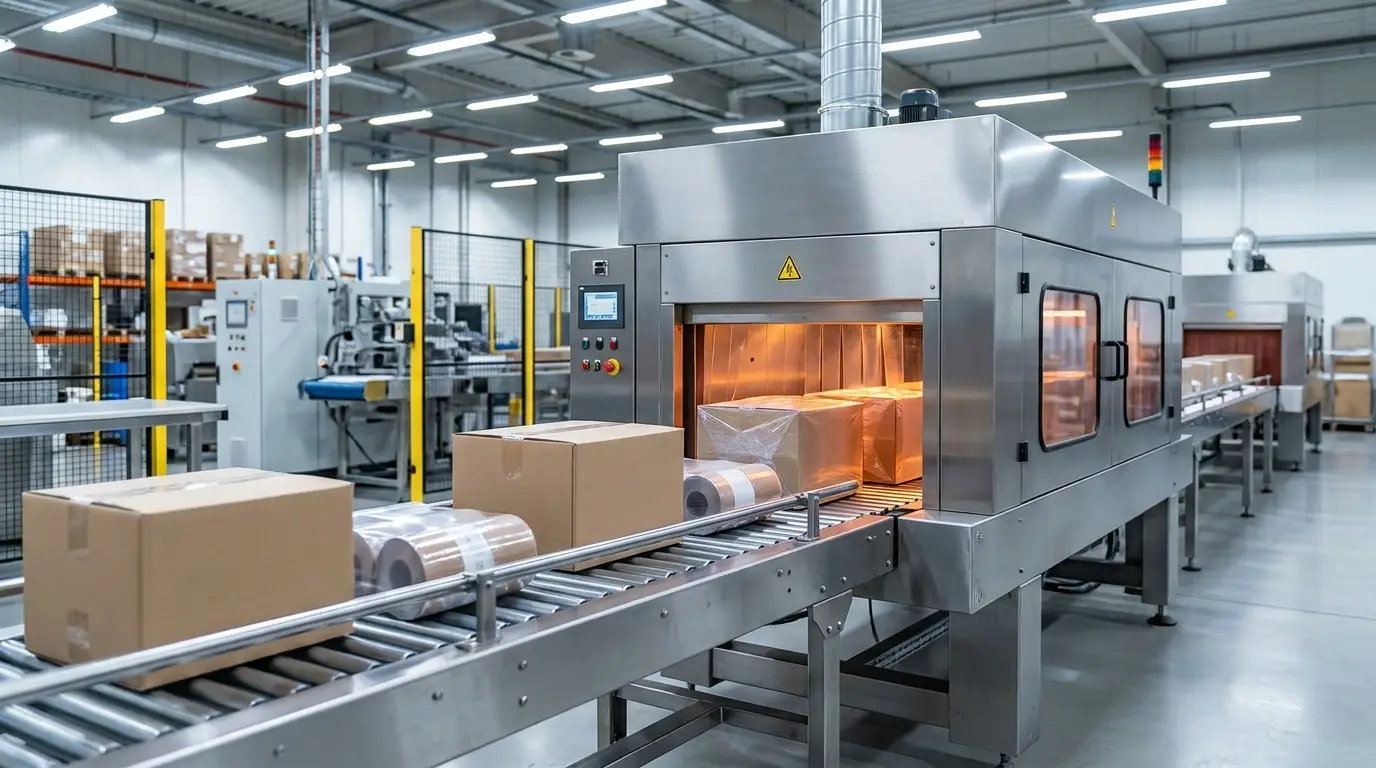
Shrink Packaging: Films, Equipment and Applications
From retail shelf-ready shrink wrap to industrial transit packaging — the complete guide to shrink film types, heat tunnels, and shrink sleeve technology
What Is Shrink Packaging?
Shrink packaging uses thermoplastic film that shrinks tightly around a product when heat is applied. The film is first loosely wrapped or formed around the product, then passed through a heat tunnel or exposed to a heat gun, causing the polymer chains to contract and conform exactly to the product's shape.
The result is a tight, protective, tamper-evident wrap that improves product presentation, protects against dust and moisture, and enables multi-pack bundling. Shrink packaging is one of the most widely used packaging formats globally — deployed across food, beverages, consumer goods, industrial products, and pharmaceuticals.
Key applications include: retail over-wrap for trays and boxes, multi-pack bundling (e.g. 6-pack beverages), pallet unitisation for transit, tamper-evidence banding on bottles and jars, and full-body shrink sleeve labels that provide 360° print coverage.
Shrink Film Types and Properties
Polyolefin (POF) Shrink Film
Polyolefin is the most widely used shrink film for retail food and consumer goods packaging. It offers excellent clarity, high gloss, and cross-linked structures that produce tight, wrinkle-free shrink results. POF is FDA food-contact approved, produces no chlorine-containing byproducts when shrunk, and is compatible with high-speed packaging lines. Standard gauges range from 12–19 microns for light retail applications to 25–35 microns for heavier products.
PVC Shrink Film
PVC (Polyvinyl Chloride) shrink film has traditionally been used for label sleeves, multi-pack banding, and stationery/media packaging due to its low cost and printability. However, PVC shrink is declining in food packaging applications due to concerns about HCl emissions during heat processing and end-of-life recyclability limitations. It remains widely used for non-food shrink sleeve labels.
Polyethylene (PE) Shrink Film
PE shrink film is the dominant format for industrial and transit packaging — particularly pallet wrapping, beverage multi-pack bundling (e.g. Aldi-style tray-and-shrink), and heavy-duty product unitisation. Available in LDPE, LLDPE, and HDPE variants, PE films offer excellent puncture resistance and are well-suited to recycling in PE streams where collection infrastructure exists.
PET / PETG Shrink Sleeve Film
PET and PETG films are specifically engineered for shrink sleeve label applications. Their high shrink ratio (up to 78% in the transverse direction), excellent printability, and optical clarity make them the preferred choice for full-body sleeve labels on irregular container shapes — bottles, cans, tubs, and multipack handles.
Shrink Packaging Equipment
L-Bar Sealers
L-bar sealers cut and seal the film around the product in a single L-shaped cut, creating a loose sleeve that is then conveyed through a heat tunnel. They range from manual bench-top models for low-volume operations to fully automatic inline systems producing 40–60 packs per minute. L-bar systems are ideal for retail over-wrap of boxes, trays, and consumer products.
Side-Seal (Horizontal Flow Wrap) with Shrink
Side-seal shrink machines form a continuous tube from a flat film roll, seal the sides and ends, and deliver a loosely wrapped pack to a heat tunnel. This configuration is common in food manufacturing — combining the throughput advantages of flow wrapping with the presentation quality of shrink. See our Flow Wrap guide for detail.
Heat Tunnels
Heat tunnels use convective hot air (and sometimes IR radiation) to apply uniform heat across the wrapped product. Tunnel temperature, belt speed, and air velocity are adjusted to match the film type and product. Excess heat causes burn-through or haze; insufficient heat produces incomplete shrink with 'dog ears'. Modern tunnels feature PLC control with recipe storage for consistent results across product changeovers.
Shrink Sleeve Applicators
Shrink sleeve labelling uses dedicated applicator machinery to cut sleeve sections from a pre-printed reel, open them, and slide them over the container at high speed before the steam or IR shrink tunnel contracts them to a precise fit. Speeds of 200–600 containers per minute are achievable on modern rotary sleeve applicators.
Sustainability and Recyclability of Shrink Films
Shrink film sustainability is primarily driven by the shift towards mono-material PE structures and away from PVC. Key developments include:
- All-PE shrink film replacing PVC for sleeve labels and multi-pack banding, enabling recyclability in PE streams
- Down-gauging — reducing film thickness by 15–30% while maintaining performance through enhanced polymer formulations
- Post-consumer recycled (PCR) content in PE shrink films for industrial transit packaging
- Water-based inks and adhesive-free sleeve structures to simplify recycling separation
The EU PPWR requires all packaging to be recyclable by design by 2030, with minimum recycled content requirements phased in from 2030–2040. Shrink film producers are actively responding with certified recyclable film structures.
Frequently Asked Questions
Shrink wrap is a film that contracts when heat is applied, conforming tightly to the product. Stretch wrap (stretchfilm) is a highly elastic film that is mechanically stretched and wrapped around products or pallets under tension — it holds by cling, not heat. Shrink is typically used for retail presentation and tamper evidence; stretch wrap is used for pallet unitisation and secondary transit packaging.
Polyolefin (POF) is the industry standard for food shrink packaging due to its FDA food-contact approval, clarity, and performance on high-speed lines. It produces no harmful byproducts when heated. PE shrink is preferred for beverage multi-packs and industrial food applications. PVC is generally avoided for food direct-contact applications due to regulatory and sustainability concerns.
Most shrink tunnels operate between 120°C and 180°C, with the exact temperature depending on film type and thickness. POF films typically shrink at 130–160°C; PE films require higher temperatures (150–180°C); PVC films shrink at lower temperatures (100–130°C). Belt speed through the tunnel is adjusted in combination with temperature to achieve complete shrink without over-heating.
Yes — this is one of shrink packaging's primary advantages over rigid formats. Shrink film conforms to almost any shape, including irregular, multi-cavity, or asymmetric products. Shrink sleeve labels are specifically engineered for highly irregular containers. The shrink ratio of the film determines the maximum shape variation it can accommodate.
It depends on the film type. POF and PE shrink films are recyclable in PE streams where collection and sorting infrastructure exists, and several PE shrink film grades carry How2Recycle or RecyClass certification. PVC shrink film is not recyclable in standard polymer streams. PETG shrink sleeve labels can contaminate PET bottle recycling if not removed — detection and removal systems are required at the MRF level.
Shrink Packaging SolutionsDiscuss film selection, heat tunnel specifications, and line integration for your application.
Contact Us →